
- Education · News
- Estimated reading time:4 min read
How to Choose a Shopify Alternative for a Growing Brand
- By Stoify
What growing ecommerce teams should compare when evaluating a Shopify alternative, from catalog and inventory operations to storefront control, SEO, checkout, and integration overhead.
Share this page
Choosing a Shopify alternative is usually framed as a feature checklist problem. In practice, it is more often a workflow problem. The real question is not only whether a platform can technically support your store. It is whether the system still feels coherent once the catalog grows, inventory becomes more complex, and the storefront needs more intentional control.
That is where many teams start looking beyond Shopify. They are not always trying to leave a bad platform. They are trying to reduce app sprawl, tighten up store operations, and work inside a system that feels more deliberate.
For a direct breakdown, the fastest place to start is Stoify vs Shopify. If you want the broader decision framework first, this guide walks through the core criteria.
Start with the day after launch
Most platform decisions are made around launch. That is understandable, but it misses where the real friction usually appears.
The more useful question is this: what will this platform feel like six months after launch?
That is when the pressure shows up:
- More products to structure and maintain
- More decisions around inventory and availability
- More SEO work across collections and content
- More operational visibility needed across carts, products, and fulfillment
- More team members touching the store
If a platform feels clean during setup but fragmented after growth, the long-term cost becomes much higher.
For Stoify, that day-to-day surface includes product variants, media, categories, collections, digital downloads, multi-location stock, active and abandoned carts, checkout, shipping, invoices, shipments, returns, and customer modules such as reviews, wishlists, analytics, cookie consent, and loyalty points. Abandoned cart visibility and manual reminder emails are provided through the optional Abandoned cart recovery module, which is off by default and enabled from Settings → Modules. Those details are worth checking because they show how a platform behaves after the launch checklist is over.
Compare platform shape, not just platform features
Two platforms can both support products, checkout, and payments while creating very different operating experiences.
When evaluating a Shopify alternative, compare:
- How many tools or apps you need before the workflow feels complete
- Whether storefront work and operational work live close together
- How easy it is to understand inventory, carts, and product structure
- Whether SEO controls are built into the publishing workflow
- How much maintenance overhead the system pushes back onto your team
This is also why feature pages matter. Browsing the Stoify feature library often makes the platform shape easier to understand than reading a generic pricing page.
Pay close attention to operational clarity
Growing brands usually feel operational friction before they feel enterprise-scale feature gaps.
That means clarity matters more than teams sometimes expect. A platform should make it easy to answer questions like:
- What can we actually sell right now?
- Which products are easiest to manage and merchandize?
- Where are customers hesitating before checkout?
- Which pages should we improve for search visibility next?
If those answers are scattered across separate systems, the store becomes harder to run even if the platform still looks powerful on paper.
SEO should be part of the platform decision
Search visibility is often treated as a later optimization. That is a mistake.
Your platform affects:
- How metadata is managed
- How crawlable product and collection pages are
- How quickly pages load
- How structured data is maintained
- How content and commerce pages link together
If SEO matters to your growth model, it should be part of the evaluation from the start. The platform should support discoverability without forcing SEO to become a cleanup project later.
In Stoify, that includes a site description for search and previews, page-level SEO titles and descriptions in the builder, index or noindex controls, canonical URLs, robots rules, and sitemap references. It is not a replacement for thoughtful content or technical SEO work, but it gives the team a maintainable foundation.
Inventory and catalog structure usually matter more than expected
Many teams compare design flexibility first and inventory second. As the business grows, that order often flips.
Inventory accuracy, product structure, and catalog readability affect:
- Launch speed
- Merchandising quality
- Customer trust
- Fulfillment confidence
- Team coordination
That is why operational features like multi-location inventory and product management are not edge cases. They are part of what determines whether the store stays manageable.
It is also worth asking whether integrations have a clear boundary. Stoify provides named API keys, authenticated paginated product, category, and collection endpoints, dashboard reference examples, and plan-aware rate limits. That is a focused catalog API rather than a claim that every possible workflow is already exposed.
Compare maintenance overhead honestly
Every platform has tradeoffs. The important thing is to identify where the complexity lives.
Some systems are more flexible because they let you assemble more of the solution yourself. Others are more opinionated because they absorb more of that complexity into the product.
Neither approach is automatically better. But if your team is already stretched, lower maintenance overhead often creates a much bigger advantage than theoretical flexibility.
The best Shopify alternative depends on what you are optimizing for
If you want the broadest ecosystem and are comfortable coordinating more moving parts, Shopify can still be the right fit.
If you want a platform that keeps storefront, product, cart, and operational workflows closer together, Stoify becomes more compelling.
That is the more useful lens: not "which platform wins in general?" but "which platform shape fits the way we want to operate?"
A better final question
Before deciding, ask this:
Will this platform help us run the store more clearly as we grow, or will it ask us to manage more fragmentation over time?
That question will usually lead to a better answer than a giant feature checklist.
Continue exploring
Related Stoify articles and feature pages connected to this topic.

Catalog
Product management that stays fast as your catalog grows
Manage product details, variants, media, digital downloads, categories, collections, pricing, and visibility from one focused workflow.
Inventory
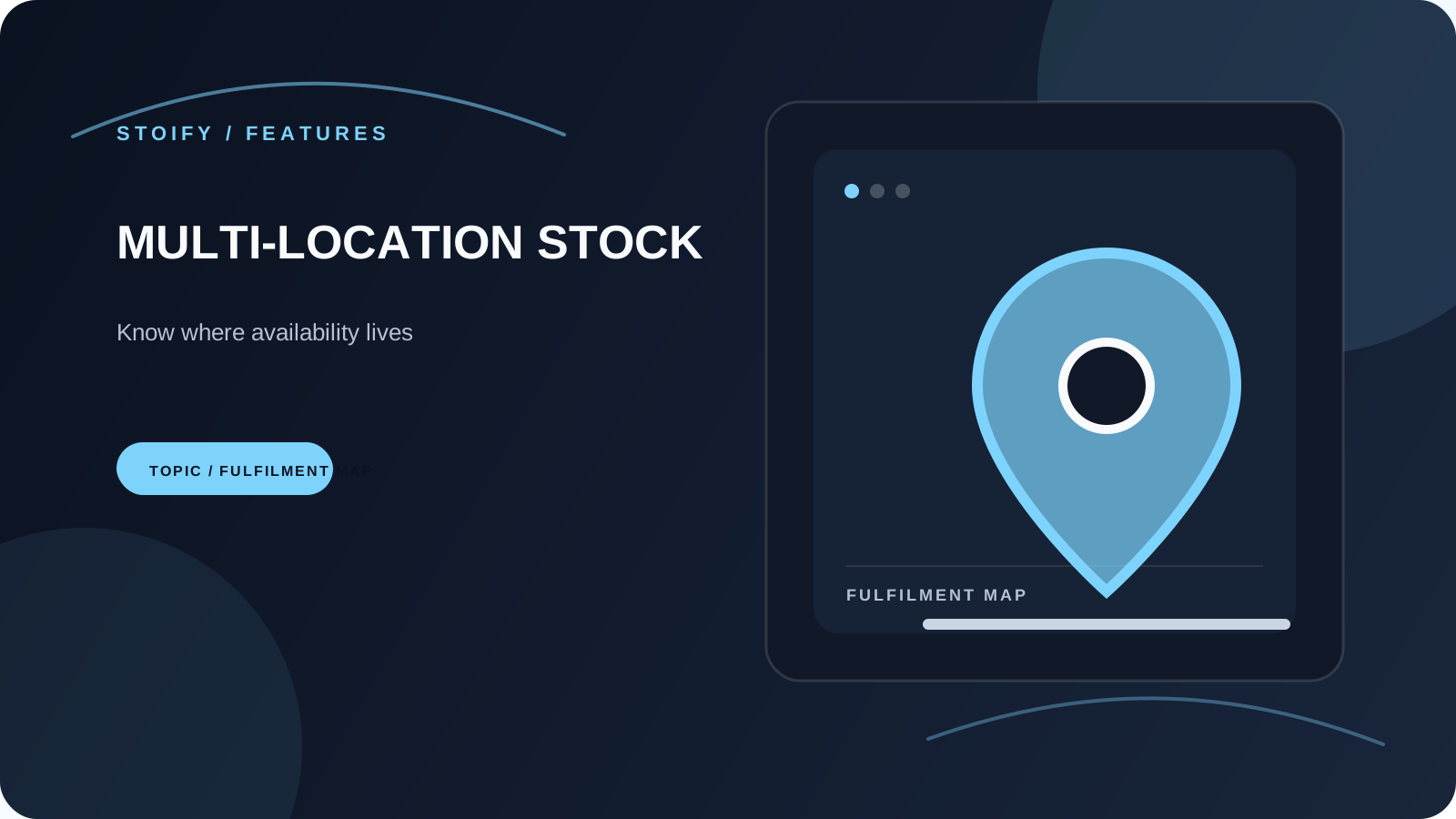
Multi-location inventory built for calmer operations
Track stock across locations without splitting your team across extra tools. Stoify keeps on-hand, reserved, and available inventory easier to understand from day one.
Growth & retention
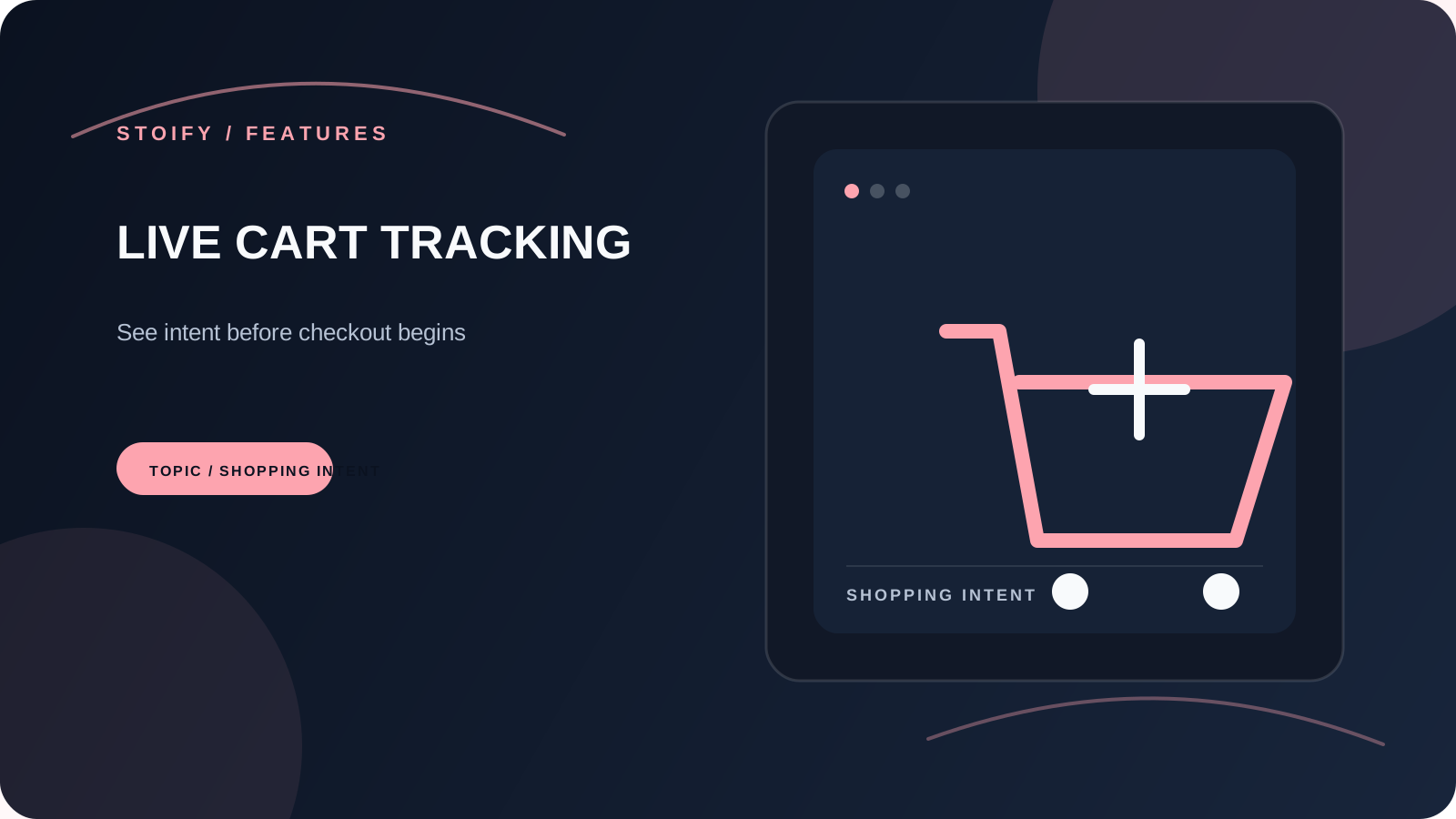
Live cart tracking that shows intent before checkout
Monitor active and abandoned carts, understand shopper intent before checkout, and follow up with reminder emails when buying momentum fades.

Visibility
Storefront SEO controls and audits in one workspace
Manage page metadata, canonicals, sitemap coverage, and mobile or desktop PageSpeed audits from the same Stoify workflow that publishes your store.