- News · Product
- Estimated reading time:2 min read
Developer access without a second storefront runtime
- By Stoify
Why Stoify's new Enterprise Code mode treats theme files as a controlled source surface that stays connected to the visual builder and live storefront preview.
Share this page
Today we are introducing Code mode for Enterprise storefront teams that want developer access without giving up the visual builder.
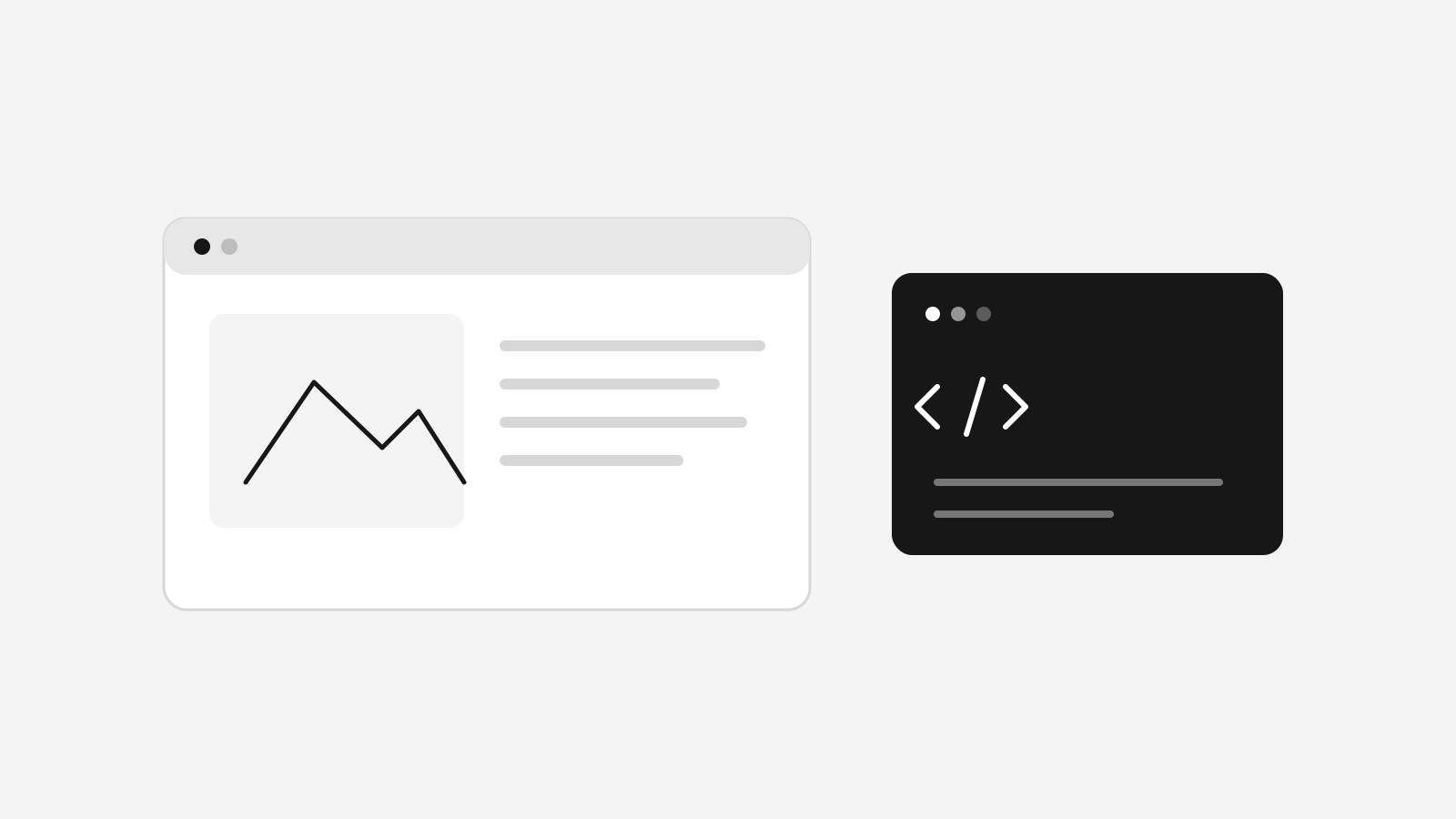
The workflow is familiar: open a file tree, keep several files in tabs, edit JSON or CSS, format the source, and watch the storefront preview beside the editor. The important difference is what the editor does not do. It does not execute arbitrary HTML or JavaScript inside the storefront. It edits a controlled source surface that maps back to Stoify's existing normalized theme and template model.
Developers can also add safe custom class hooks to section, block, header, navigation, and footer roots. That gives a CSS workflow real precision without requiring arbitrary markup or executable theme files. The active JSON or CSS file can be downloaded for review or replaced through the import control, with validation before anything is saved.
A fixed file tree with real storefront impact
The first version exposes theme settings, navigation, footer configuration, home and commerce templates, search and event templates, and scoped custom CSS. Those files are not mock artifacts: the same values drive the visual builder and the published storefront renderer.
That makes Code mode useful for developers who prefer structured source, while keeping the visual editor useful for content teams and merchants who want direct manipulation. A team can move between both modes without exporting a theme or maintaining two versions of the design.
Diagnostics before publish
Code editing needs a clear failure state. A malformed JSON file stays local to the editor, shows a diagnostic, and leaves the last valid preview state in place. Save is disabled until the source can be normalized safely. CSS is validated against the same controlled boundary, so imports and script-like browser rules cannot slip into a saved theme file.
This is a small but important distinction: developer access should make a storefront more expressive without making the runtime harder to reason about.
Built for the whole theme workflow
The new workbench shares Stoify's existing preview sessions, responsive viewport controls, undo and redo history, action-result feedback, and site scoping. Theme packages preserve the source files when they are exported, so an approved theme can still move through review, version control, handoff, and the private marketplace workflow.
Explore the developer theme editor for the full Code mode workflow and Enterprise access details.
Continue exploring
Related Stoify articles and feature pages connected to this topic.